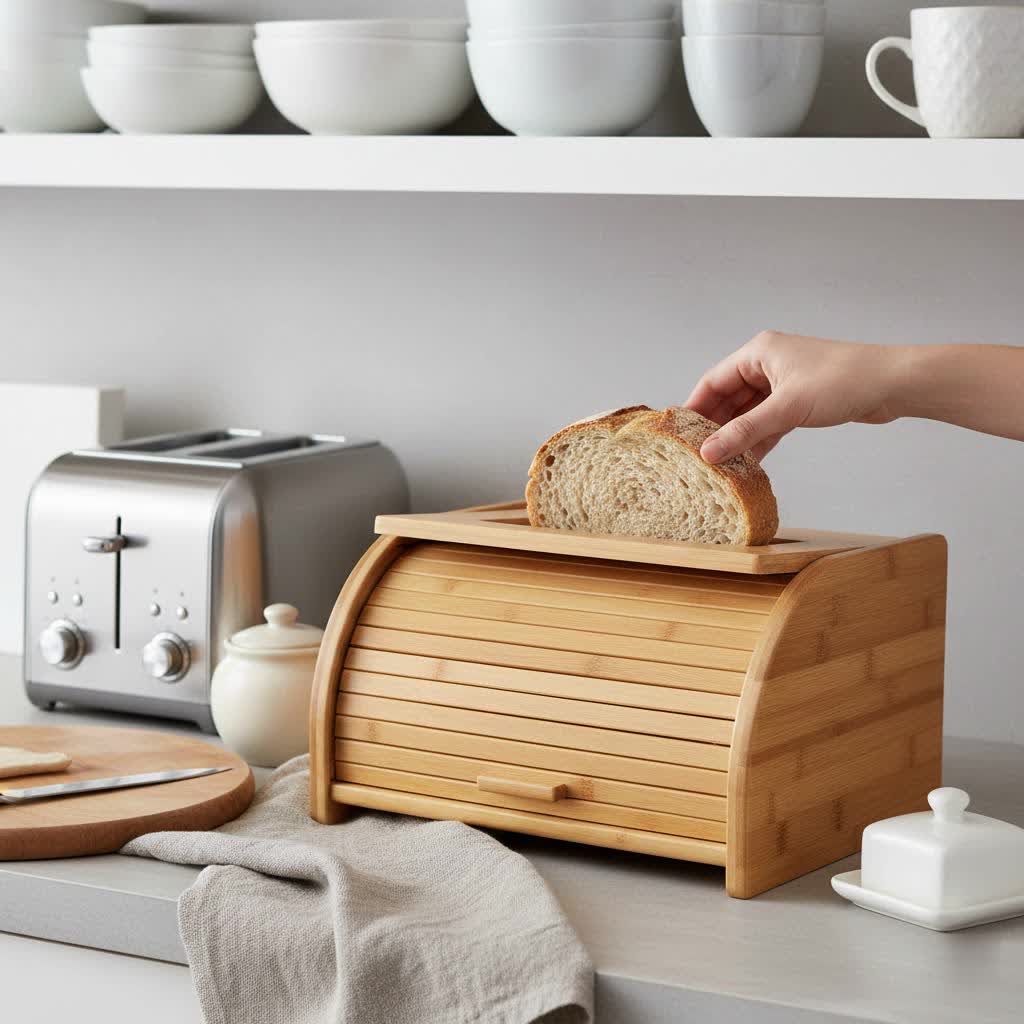
Few things are as disappointing as reaching for a beloved loaf of bread, only to find it stale, dry, or worse, covered in mold. Bread, whether homemade artisan sourdough or a simple baguette, deserves proper care to maintain its delightful texture and flavor. This is where a quality bread box becomes an indispensable kitchen companion. Among the many options available, the Emile Henry Bread Box stands out as a premium choice, blending traditional French craftsmanship with modern functionality.
What is a Bread Box and Why Do You Need One?
A bread box is essentially a designated container for storing bread and other baked goods at room temperature. Its primary purpose is to create an optimal environment that keeps bread fresh for longer than simply leaving it on the counter or in a plastic bag. Historically, bread boxes have been a staple in kitchens worldwide, evolving from simple wooden chests to more sophisticated designs. For more kitchen organization guides on this site.
You might wonder why a dedicated bread box is necessary when plastic bags or refrigeration are options. The truth is, plastic bags can trap too much moisture, accelerating mold growth, while refrigeration tends to dry out bread and make it stale faster due to a process called retrogradation. A well-designed bread box, however, masterfully balances humidity and airflow. This controlled environment delays the staling process by preventing excessive moisture loss and inhibiting the rapid development of mold, ensuring your bread remains soft on the inside with a desirable crust for days. Beyond preservation, a bread box also serves as a stylish solution for decluttering your countertops, protecting your baked goods from household pests, and presenting them elegantly.
Introducing the Emile Henry Bread Box
The Emile Henry Bread Box is not just a storage container; it’s a testament to enduring quality and thoughtful design, originating from the famed pottery workshops of Marcigny, France, since 1850. What sets this bread box apart is its meticulous construction and the specific materials chosen to create the ideal bread-preserving environment.
The base of the Emile Henry Bread Box is crafted from high-quality Burgundian clay, utilizing Emile Henry’s signature HR® (High Resistance) ceramic technology. This ceramic is known for its ability to maintain a stable internal temperature and humidity level. The robust, elegant ceramic body is paired with a durable, oiled bamboo lid. This combination is crucial for its performance: the ceramic base helps regulate moisture, keeping the bread’s interior soft, while subtle ventilation (often a small hole at the bottom) allows for just enough airflow to maintain a crisp crust and prevent excessive humidity that leads to mold. The result is a premium bread storage solution that is both highly effective and visually appealing, reflecting a rustic yet refined aesthetic that complements any kitchen decor.
Unpacking the Benefits: Why Choose Emile Henry?
Investing in an Emile Henry Bread Box brings a host of advantages for any bread enthusiast, particularly those who appreciate both form and function in their kitchen tools.
Superior Freshness and Longevity
|
Our Picks for the Best Bread Box in 2026
As an Amazon Associate I earn from qualifying purchases.
|
||
| Num | Product | Action |
|---|---|---|
| 1 | Black Corner Bread Box for Kitchen Countertop, Large Bread Container Storage Bamboo Wooden Farmhouse Bread Box with Window Bread Holder |

|
| 2 | Fullin Bread Box for Kitchen Countertop, Bread Storage Container Large Capacity Bamboo Homemade Bread Boxes, Bread Food Holder Organizer with Acrylic Window for Kitchen Counter, Panry Shelf, Cabinet |
|
| 3 | Bread Box Bread Boxes for Kitchen Counter Airtight, Time Recording Bread Storage Container with Lid, Bread Keeper for Homemade Bread, Toast, Bagel, Donut and Cookies, Grey |
|
| 4 | Sunhoo Bread Box for Kitchen Countertop Wooden Bread Storage Container Bin 2 Layer Breadbox Holder Large Capacity Keeper Vintage Farmhouse Food Organizer Pantry Shelf Acrylic Window (Brown) |
|
| 5 | Double Layer Bread Box for Kitchen Countertop, Large Breadbox Bread Container Storage with Windows, Wooden Farmhouse Bread Holder (Black) |
|
| 6 | 2 Pack Glass Loaf Pan with Lid, 1.9QT/ 62 OZ Bread Pan - Baking Dish with Airtight Lids BPA free - Meatloaf Pans For Homemade Bread, Baking, Cakes, Dessert,Microwave & Oven Safe |
|
| 7 | ZICOTO Beautiful Bread Box With Wooden Lid For Your Kitchen Countertop - Spacious Container Perfectly Stores Your Homemade Bread, English Muffins & Bagels - Quality Cutting Board Lid Keeps Loaf Fresh |
|
| 8 | Bamboo Bread Box for Kitchen Counter-Large Capacity Bread Storage Container Farmhouse Bread Box with Window Bread Holder |
|
| 9 | ROYALHOUSE Natural Bamboo Roll Top Bread Box Kitchen Food Storage - Assembly Required |
|
| 10 | Amazon Basics Carbon Steel Bread Box with Acacia Wood Lid, Lid Doubles as Cutting Board, 11.9 x 7.1 x 5.2 in. |
|
The core benefit of the Emile Henry Bread Box lies in its unparalleled ability to extend the life and quality of your bread. The ceramic base acts as a natural hygrometer, absorbing excess moisture if the environment is too humid and releasing it if the bread starts to dry out. This natural temperature and humidity regulation, combined with carefully designed airflow, prevents your bread from quickly becoming stale or moldy. It ensures that the inside remains soft and pliable, while the crust retains its satisfying crispness for several days, far longer than many other storage methods. This makes it particularly effective for homemade artisan loaves and sourdough, allowing you to savor every slice.
Elegant Design and Craftsmanship
Beyond its functional excellence, the Emile Henry Bread Box is a piece of art for your kitchen. Its elegant, timeless design, characterized by the glossy ceramic and warm bamboo lid, adds a touch of rustic charm and sophistication to any countertop. Each box is a product of traditional French craftsmanship, made in Marcigny, France, a heritage that speaks volumes about its quality and durability. This isn’t just a utilitarian item; it’s a decorative accent that reflects a discerning taste for high-quality, long-lasting kitchenware. The substantial weight of the ceramic also conveys a sense of premium build and stability.
Multifunctionality and Convenience
The Emile Henry Bread Box is designed with practical daily use in mind. Its oiled bamboo lid is not merely a cover; it ingeniously doubles as a sturdy cutting board. One side is smooth, while the other features integrated grooves that effectively catch crumbs as you slice your bread, ensuring a tidy workspace. This dual-purpose design is a significant convenience, eliminating the need for a separate cutting board and making serving bread effortless. Furthermore, the ceramic base is dishwasher-safe, simplifying cleanup and maintaining hygiene, a crucial factor for any food storage item.
Ideal Environment for Homemade Bread
For those who bake their own bread, especially dense, crusty loaves like sourdough or artisan white bread, the Emile Henry Bread Box provides an ideal storage solution. Its specific humidity and airflow control mimics the conditions that preserve the natural qualities of such breads, keeping the interior moist and the exterior crusty without sacrificing either. While some bread boxes might struggle with the nuances of homemade bread, the Emile Henry is engineered to support the unique characteristics of these fresh-baked delights.
Exploring Different Types of Bread Boxes
Bread boxes come in a variety of materials and styles, each with its own set of characteristics. Understanding these differences can help you appreciate what makes the Emile Henry design unique.
By Material
The material of a bread box significantly impacts its performance, aesthetics, and maintenance.
- Wood: Often chosen for its natural look and ability to absorb some moisture, helping to prevent sogginess. However, wood can be harder to clean and may harbor bacteria if not properly maintained. It can also dry out bread if airflow is too high.
- Metal (e.g., Stainless Steel): Durable, easy to clean, and often offers a sleek, modern aesthetic. Metal can sometimes create condensation if not properly ventilated, potentially leading to mold. Roll-top designs are common in metal bread boxes.
- Plastic: Generally the most affordable and lightweight option, plastic bread boxes are easy to clean. However, they can lack the aesthetic appeal of natural materials and may not offer the same level of breathability, sometimes trapping too much moisture.
- Ceramic (General): Similar to the Emile Henry, ceramic offers excellent temperature and humidity stability. It’s durable and often aesthetically pleasing. General ceramic boxes may vary in specific ventilation design compared to the specialized Emile Henry.
By Style
The style of a bread box primarily relates to its opening mechanism and overall shape, affecting both accessibility and kitchen aesthetics.
- Roll-top: Features a curved lid that rolls back into the box, saving countertop space. Common in metal and some wooden designs.
- Flip-top: A simple lid that lifts or flips open. These are straightforward but require overhead clearance.
- Drawer-style: Less common, these integrate into cabinetry or have a pull-out drawer mechanism.
- Wall-mounted: Designed to hang on a wall, saving counter space, but offering less flexibility.
- The Emile Henry (Lift-off Lid): This design features a simple, elegant lift-off lid (which doubles as a cutting board). This style is classic and effective for maintaining the internal environment, though it requires a small amount of space to lift the lid completely. Its robust ceramic base makes it a stationary, countertop piece.
Emile Henry Bread Box: A Detailed Comparison
When placed against other common bread box types, the Emile Henry distinguishes itself through a unique combination of material science, design, and artisan quality.
| Feature | Emile Henry Ceramic & Bamboo | Wooden Bread Box (e.g., Bamboo) | Metal Bread Box (e.g., Stainless Steel) | Plastic Bread Box |
|---|---|---|---|---|
| Material | HR® Ceramic base, Oiled Bamboo lid | Various woods (bamboo, acacia, pine) | Stainless steel, painted steel | Various food-grade plastics |
| Design Aesthetics | Elegant, rustic, timeless, premium | Natural, farmhouse, can be rustic | Modern, industrial, sleek | Utilitarian, diverse colors |
| Freshness Retention | Excellent (stable humidity, controlled airflow) | Good (can vary with wood type/ventilation) | Good (if well-ventilated, can trap moisture) | Fair (can trap moisture, less breathable) |
| Durability | Very High (ceramic, 10-year warranty) | High (can warp or crack if not cared for) | High (can dent) | Moderate (can scratch, crack) |
| Ease of Cleaning | Ceramic base is dishwasher-safe, lid needs hand wash | Can be challenging, requires specific care | Very easy (wipes clean) | Very easy (dishwasher-safe) |
| Multifunctionality | Lid doubles as a crumb-catching cutting board | Some lids can be cutting boards, rare | Rarely multifunctional | Rarely multifunctional |
| Airflow/Ventilation | Carefully designed holes for optimal balance | Varies by design, often minimal | Varies by design, can be limited | Often minimal, relies on loose seal |
| Price Range | Premium (higher investment) | Mid-range | Mid-range | Budget-friendly |
| Capacity | Good (fits standard loaves, baguettes, rolls) | Varies, often generous | Varies, often generous | Varies, often generous |
| Weight | Heavy and stable | Moderate | Moderate to light | Lightweight |
| Origin | Made in France (Marcigny) | Varies | Varies | Varies |
The Emile Henry stands out for its specific ceramic technology, designed not just for storage, but for optimal bread preservation through precise humidity management. Its integrated cutting board lid elevates its functionality beyond a simple storage bin, justifying its position as a premium choice. While other bread boxes offer certain benefits like a lower price point or different aesthetics, few match the Emile Henry’s specialized approach to combining fresh-keeping capabilities with high-end design and a distinct heritage.
How to Choose the Perfect Bread Box (and if Emile Henry is Right for You)
Selecting the ideal bread box involves considering your specific needs, kitchen environment, and personal preferences. While the market offers a wide array, understanding these factors will guide you to the perfect fit.
Assess Your Needs
Begin by evaluating your bread consumption habits and kitchen setup.
- Quantity of Bread: How much bread do you typically store? Do you buy large artisan loaves, multiple baguettes, or just sliced sandwich bread? The Emile Henry offers a generous capacity, capable of holding a large loaf or several smaller items. If you frequently have many different types of bread or large quantities, consider if its capacity meets your demands.
- Kitchen Space: Measure your available countertop space. The Emile Henry Bread Box is designed to be compact, but its dimensions (approx. 13.97″ W x 9.65″ D x 6.22″ H / 35.5 cm L x 25 cm W x 15.5 cm H) mean it will occupy a noticeable spot. Its aesthetic appeal makes it a welcome fixture, but ensuring it fits comfortably is key.
- Interior Decor Style: Does your kitchen lean modern, traditional, farmhouse, or minimalist? The Emile Henry, with its ceramic and bamboo construction, offers a versatile, elegant, and somewhat rustic appeal that can complement a wide range of styles, from classic to contemporary.
Prioritize Material and Design
The material and design choices are paramount for both performance and lasting satisfaction.
- Prioritize Safe, Easy-to-Clean Materials: For food storage, materials that are non-reactive and easy to sanitize are essential. The Emile Henry’s ceramic base is naturally non-reactive and conveniently dishwasher-safe, ensuring effortless cleaning and hygiene. The bamboo lid requires simple hand washing.
- Choose a Style that Suits Your Space and Preference: The Emile Henry features a lift-off lid, which requires a small amount of vertical clearance when opening. If you prefer a roll-top or a different mechanism, there are other options, but few will offer the same material benefits as the Emile Henry. Its clean lines and natural materials make it a focal point rather than just a storage bin.
Consider Added Features
Look for thoughtful additions that enhance usability and bread longevity.
- Ventilation: Proper airflow is critical to prevent both dryness and mold. The Emile Henry is specifically engineered with subtle ventilation to achieve this balance, distinguishing it from airtight containers that can accelerate mold, or overly exposed methods that lead to rapid staling.
- Moisture Control: The inherent properties of the Emile Henry’s ceramic are its greatest
Cooking gear we tested in our own kitchens
Free PDF — preheat times measured on 10 popular air fryers.
